12 Most Charming Seaside Towns in Portugal
Portugal’s most charming seaside towns preserve centuries of maritime heritage alongside golden beaches, traditional fishing harbors, and historic waterfront districts. In Nazaré, fishing traditions remain an important part of the community, while the colorful striped houses of Costa Nova reflect the region’s coastal identity. Farther south, Carvoeiro overlooks sheltered beaches framed by limestone cliffs, and Tavira retains its historic architecture along the Gilão River. Portugal’s coastline rewards visitors with fresh seafood, scenic walking trails, and opportunities to discover local culture. These 12 seaside towns are particularly appealing for their architecture, natural surroundings, and connections to the Atlantic Ocean.
Nazaré
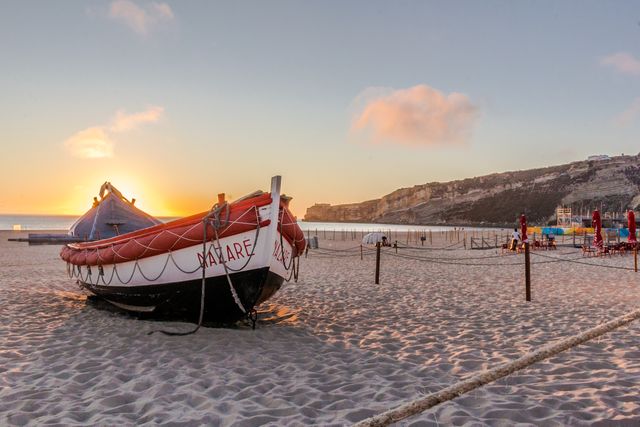
Nazaré’s traditional fishing heritage remains visible along Avenida da República, where seafood restaurants overlook a broad sandy beach. Local vendors occasionally wear traditional clothing, while dried fish displays along the waterfront preserve a longstanding method of food preparation.
The Nazaré Funicular connects the beachfront district with Sítio, a neighborhood overlooking the Atlantic Ocean. Here, the Sanctuary of Our Lady of Nazaré stands near the Miradouro do Suberco viewpoint. The nearby Fort of São Miguel Arcanjo overlooks Praia do Norte, a beach internationally recognized for its enormous winter waves. The fort also contains exhibits about the area’s surfing culture and the underwater Nazaré Canyon.
Ericeira
Whitewashed houses with blue trim characterize the narrow streets of Ericeira, a fishing community with a strong connection to surfing. Praça da República, commonly called Jogo da Bola, serves as a central gathering place surrounded by cafés, restaurants, and traditional storefronts.
Praia dos Pescadores lies beneath the historic town center, where fishing boats share the shoreline with beachgoers. Farther north, Ribeira d’Ilhas Beach attracts surfers with its consistent Atlantic waves and surrounding cliffs. Ericeira became a World Surfing Reserve in 2011, recognizing the quality of its coastal environment and surf breaks. The Chapel of São Sebastião also deserves a visit for its decorative Portuguese tilework.
Cascais
Cascais combines elegant coastal architecture with sandy beaches and a pedestrian-friendly historic center. Praça 5 de Outubro overlooks the town’s fishing harbor, with traditional Portuguese pavement decorating the square. Nearby, Rua Frederico Arouca contains restaurants, boutiques, and bakeries selling Portuguese pastries.
The Condes de Castro Guimarães Museum occupies an ornate mansion beside Marechal Carmona Park, where shaded paths wind past ponds and landscaped gardens. Along the coastline, the Santa Marta Lighthouse Museum introduces visitors to Portugal’s maritime navigation history. A coastal walking route continues toward Boca do Inferno, a natural rock formation where Atlantic waves enter a rugged opening in the limestone cliffs.
Sesimbra
Sesimbra stretches along a sheltered bay beneath the forested hills of the Arrábida mountain range. Praia da Califórnia and Praia do Ouro border the town’s waterfront, where restaurants specialize in grilled fish and other regional seafood dishes. The Fortress of Santiago stands between the beaches and houses a maritime museum.
Above the town, Sesimbra Castle preserves medieval defensive walls with sweeping views across the coastline. The surrounding Arrábida Natural Park protects limestone mountains, Mediterranean vegetation, and secluded beaches. Praia do Ribeiro do Cavalo, accessible by hiking trail or boat, is particularly attractive for its clear water and rocky coastal setting.
Vila Nova de Milfontes
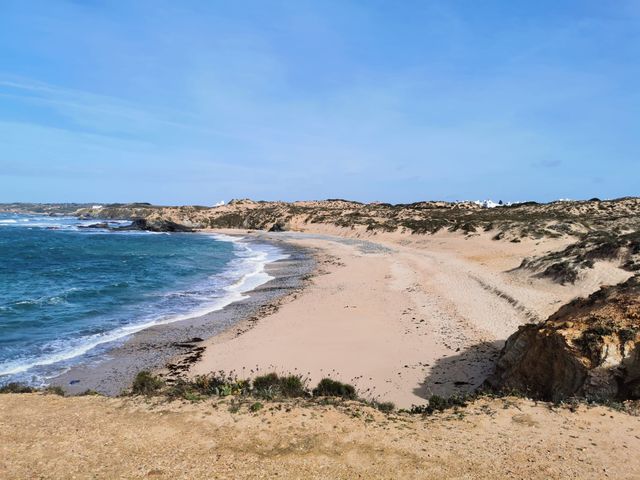
Vila Nova de Milfontes occupies the northern bank of the Mira River near its meeting point with the Atlantic Ocean. White buildings and traditional tiled façades line the historic center, while the Fort of São Clemente overlooks the river mouth.
Praia da Franquia has sheltered waters suitable for paddleboarding and kayaking, while nearby Praia do Farol faces the open Atlantic. The surrounding Southwest Alentejo and Vicentine Coast Natural Park contains coastal cliffs, wildflowers, and undeveloped beaches. Sections of the Fishermen’s Trail pass through the area, allowing hikers to follow traditional coastal routes once used by local fishing communities.
Porto Covo
Porto Covo’s white cottages, blue window frames, and red roofs surround Praça Marquês de Pombal, a historic square with traditional Portuguese architecture. Restaurants along Rua Vasco da Gama serve regional seafood within walking distance of the ocean.
The coastline consists of small sandy coves separated by dark rocky headlands. Praia Grande is one of the community’s principal beaches, while Praia dos Buizinhos occupies a smaller inlet near the town center. Offshore, Pessegueiro Island contains the remains of ancient Roman fish processing facilities and a historic fort. During suitable weather conditions, seasonal boat excursions allow visitors to appreciate the island and surrounding coastline.
Costa Nova
Costa Nova is immediately recognizable for its striped houses, known locally as palheiros. Originally associated with the fishing industry, many of these buildings now serve as residences, shops, and vacation accommodations. Their red, blue, green, and yellow stripes brighten Avenida José Estêvão along the waterfront.
The Costa Nova Fish Market sells fresh seafood, reflecting the community’s continued connection to the surrounding waters. On the Atlantic side, Praia da Costa Nova has extensive sandy beaches backed by dunes. Wooden boardwalks protect the coastal vegetation while allowing pedestrians to access the shoreline. The neighboring Ria de Aveiro lagoon also supports sailing, paddleboarding, and birdwatching.
São Martinho do Porto
São Martinho do Porto surrounds a naturally sheltered bay with an almost circular shape. A narrow opening connects the bay with the Atlantic Ocean, creating relatively calm waters that attract families during the summer. Avenida Marginal follows the shoreline, passing restaurants, cafés, and public seating areas.
The historic upper town contains traditional buildings and the Church of São Martinho do Porto. Near the waterfront, a pedestrian tunnel leads through the rocky headland toward the open Atlantic. Across the bay, the dunes near Salir do Porto rise above the surrounding landscape. Walking paths around the bay reveal views of fishing boats, sandy beaches, and coastal hillsides.
Peniche
Peniche occupies a rocky peninsula extending into the Atlantic Ocean, where fishing boats and historic fortifications reflect the community’s maritime past. The Peniche Fortress overlooks the harbor and contains the National Museum of Resistance and Freedom. Nearby streets have seafood restaurants serving freshly caught fish.
At Cabo Carvoeiro, limestone cliffs rise above the ocean beside a historic lighthouse. The unusual rock formations along the headland make it a rewarding destination for coastal photography. Peniche also serves as a departure point for excursions to the Berlengas archipelago, a protected island group with clear waters, seabird colonies, and the historic Fort of São João Baptista.
Carvoeiro
Carvoeiro’s white buildings descend toward a sandy beach enclosed by golden limestone cliffs. Largo da Praia forms the center of the community, with outdoor restaurants and cafés overlooking the sheltered cove. Fishing boats occasionally depart from the beach, continuing the area’s maritime traditions.
The Carvoeiro Boardwalk follows the clifftops toward Algar Seco, where natural rock formations contain caves, pools, and openings overlooking the Atlantic. Nearby, the Seven Hanging Valleys Trail passes several of the Algarve’s most recognizable coastal landmarks. Praia da Marinha is particularly notable for its limestone arches, clear water, and steep cliffs, which create excellent opportunities for photography.
Ferragudo
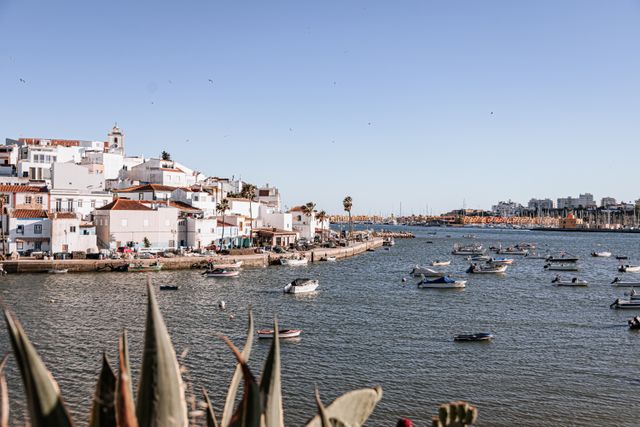
Ferragudo retains the appearance of a traditional Algarve fishing village along the eastern bank of the Arade River. Whitewashed houses follow narrow cobblestone streets toward the Church of Nossa Senhora da Conceição, which overlooks the harbor and surrounding rooftops.
Praça Rainha Dona Leonor serves as the village’s main gathering place, with outdoor dining areas and traditional restaurants. Along the waterfront, Praia da Angrinha stretches beneath the Castle of São João do Arade, a historic defensive structure overlooking the river entrance. Nearby Praia Grande has a wider sandy shoreline with beachside restaurants. Coastal paths continue toward Ponta do Altar Lighthouse, passing rocky headlands and smaller coves.
Tavira
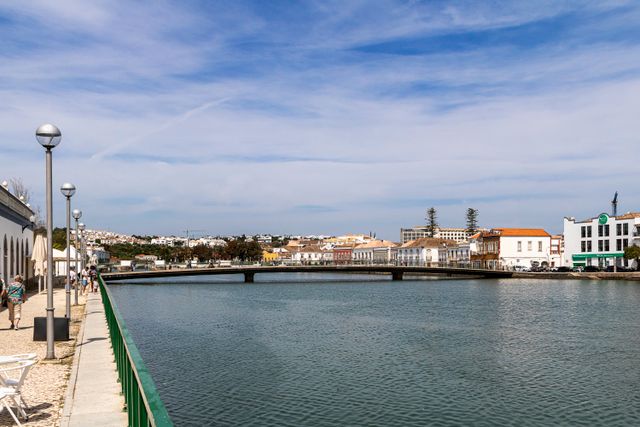
Tavira’s traditional architecture and riverside setting distinguish it from many of the Algarve’s beachfront communities. Praça da República overlooks the Gilão River, where an old stone bridge connects sections of the historic center. The gardens within Tavira Castle contain flowering plants and views across the town’s terracotta rooftops.
The Mercado da Ribeira occupies a former market building beside the river and houses restaurants and shops. Seasonal ferry services connect the mainland with Ilha de Tavira, a barrier island within the Ria Formosa Natural Park. The protected coastal environment contains extensive sandy beaches, salt marshes, and lagoons that support numerous bird species.
Discovering Portugal’s Coastal Communities
Portugal’s seaside towns retain much of their traditional character through historic fishing harbors, local markets, and distinctive architecture. Costa Nova’s striped houses preserve a connection to the fishing industry, while Ericeira and Nazaré celebrate their Atlantic surroundings through surfing and maritime traditions. Along the Algarve, limestone cliffs and sheltered beaches give Carvoeiro and Ferragudo their recognizable coastal scenery. Spring and early autumn are particularly pleasant seasons for coastal walks and outdoor dining. Throughout the year, these communities remain rewarding destinations for appreciating Portugal’s maritime culture, regional cuisine, and natural landscapes.
